
Client Inventory Segregation: A Hidden Risk in Shared Warehouses
Shared warehouse space makes sense for a 3PL. Clients can use the same building, receiving docks, labor, packing stations, and shipping operation while the warehouse uses its capacity more efficiently.
The inventory inside that space is a different matter. Every unit still belongs to a specific client, and that ownership has to remain clear from the moment stock arrives until it leaves the network.
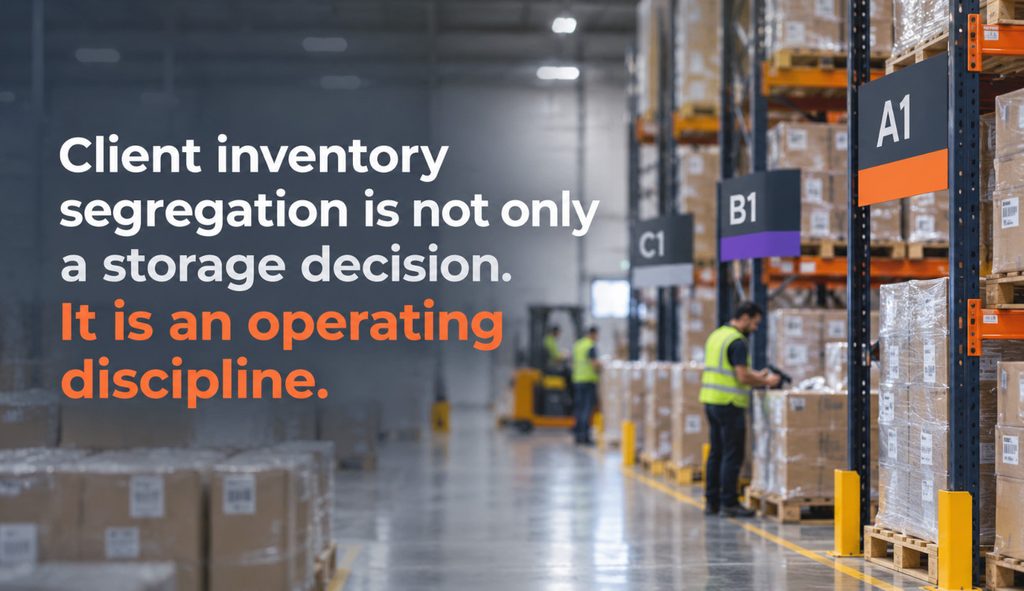
That sounds straightforward when inventory sits in clearly defined areas. It becomes harder when clients carry similar products, locations change, stock moves between buildings, returns come back, or several systems hold different parts of the record. Client inventory segregation is therefore not only a storage decision. It is an operating discipline.
Shared Space Does Not Mean Shared Ownership
A shared warehouse can look perfectly organized and still have an ownership problem underneath the surface. Boxes can sit in the correct locations while the records behind them point to the wrong client, SKU, status, or available quantity.
Physical separation helps when a warehouse can dedicate specific areas to individual accounts. It gives employees an immediate visual boundary and can simplify certain workflows. That approach becomes less practical when inventory levels change frequently or when space needs to move with demand.
Many 3PL operations therefore rely on some combination of physical and logical segregation. The warehouse may share racks, zones, equipment, and labor while its systems preserve the ownership of every unit.
That distinction matters because a location answers only part of the question. Knowing where a product sits does not automatically tell the operation who owns it, whether it is already committed, or whether the warehouse can allocate it to the next order.
Client Inventory Segregation Starts at Receiving
The first meaningful ownership decision happens at receiving. Before inventory reaches a shelf, the warehouse needs to match what arrived with the correct client and product record.
A shared receiving dock can process inbound freight for several accounts during the same shift. Employees may use the same staging areas, scanners, and receiving workflow, so the client context has to travel with the inventory rather than depend on where a pallet happens to be standing.
A receiving error can remain quiet for a while. The stock may move into storage, appear in an inventory report, and even reach picking before someone notices that it belongs to the wrong account.
Good receiving controls make ownership explicit early. Client, SKU, quantity, status, and any required product identifiers should agree before the warehouse makes the inventory available for downstream work.
Similar Products Expose Weak Records
Some segregation problems are easy to catch because the products look completely different. Others are almost invisible on the warehouse floor.
Two clients may sell the same branded item, source from the same manufacturer, or use packaging that looks nearly identical. A picker can hold the correct product in hand and still pull inventory from the wrong owner’s stock.
The shipment may leave without any customer complaint. From the customer’s perspective, the order is correct. Inside the warehouse, however, one client’s balance has been reduced while another client’s physical stock no longer matches its record.
This is why product identity needs client context. SKU and UPC data can help, but the operation also needs to know which account owns the inventory behind those identifiers.
Catalog Problems Eventually Become Warehouse Problems
Inventory segregation often starts to break before the product reaches the building. Incomplete product files, duplicate identifiers, inconsistent naming, and unclear client records create ambiguity that receiving teams later have to resolve.
The warehouse should not need to interpret which product record a carton probably belongs to. The cleaner that decision is before receiving, the easier it becomes to preserve ownership through storage and fulfillment.
This connection between catalog data and warehouse execution is easy to overlook. Product data may feel like an ecommerce or account management issue until two records point to stock that looks the same on the floor.
Once that happens, the problem becomes physical. Someone has to stop, investigate the record, confirm ownership, and decide which inventory the warehouse can actually use.
Putaway Can Protect the Boundary or Blur It
After receiving, the warehouse decides where the stock will live. Dedicated client areas make segregation visible, while shared storage gives the operation more flexibility.
Neither method works on its own. A dedicated area still needs accurate system records, and shared locations still need enough information to distinguish one client’s inventory from another.
The practical test is simple. An employee following the normal workflow should be able to identify the correct inventory without relying on memory, personal knowledge, or a separate spreadsheet.
When only experienced employees know which stock belongs to which account, the warehouse has not really solved segregation. It has transferred the control from the process to the people who happen to remember it.
Allocation Is Where Ownership Becomes Fulfillment
A warehouse can have enough units of a product in the building and still lack stock for the client that received the order.
That is the difference between total inventory and client available inventory. The first describes what exists across the operation. The second determines what a specific account can actually sell and fulfill.
Allocation needs to respect that boundary before work reaches the picking floor. An order should reserve stock owned by the correct client rather than treating similar inventory elsewhere in the building as an interchangeable pool.
This becomes especially important when several clients carry the same or closely related products. A combined quantity can make availability look healthy while one account is already short.
On Hand Inventory Does Not Tell the Whole Story
Ownership is only one part of availability. A client may own inventory that the warehouse cannot use for a new order.
Some units may already be committed. Others can be waiting for inspection, sitting on hold, moving between locations, or unavailable after damage.
A useful client inventory view keeps those states visible without confusing them with stock that is ready for allocation. Otherwise, the client can see inventory on hand while the warehouse knows that part of it cannot move.
That gap creates avoidable questions between account teams, warehouse staff, and clients. The numbers may all be technically present, but they are answering different operational questions.
Picking Tests Whether the Record Can Be Trusted
Picking is where the digital record meets the shelf. The warehouse has already made several decisions by the time an employee reaches the location.
The task should identify the product, quantity, location, and client context clearly enough that the picker can execute without interpreting ownership. Scanning and location controls can support that decision, especially when products look alike.
Exceptions still happen. A location may contain the wrong unit, a label may be damaged, or the expected quantity may not be there. The important part is having a clear path for handling the exception without guessing.
A good process protects client inventory during normal work and gives employees a defined response when the physical shelf disagrees with the system.

Returns Can Reopen a Problem That Fulfillment Already Solved
Returns bring inventory back through a different door. The product now arrives with history attached to it, including the original client, order, SKU, shipment, and reason for return.
If that connection disappears when the box reaches the dock, ownership can become uncertain again. The warehouse may know exactly what the item is while still needing to determine whose inventory should receive it.
The next action matters too. A returned unit may go back into available stock, remain on hold, require inspection, or follow another client specific process.
Connecting the return to the original order helps preserve the client boundary. It also gives the warehouse a better record of why inventory returned and what happened to it next.
Adjustments Need More Context Than a Quantity Change
Cycle counts, damage, receiving corrections, and other warehouse events can require inventory adjustments. In a shared environment, the warehouse needs to adjust the right account as well as the right SKU.
Changing the building total can make the physical count look correct while leaving client balances wrong. The discrepancy has not disappeared. It has simply moved into the ownership record.
An adjustment should therefore carry enough context to explain what changed and where it belongs. Client, product, location, quantity, and reason all matter when teams need to reconstruct what happened later.
That audit trail also makes reconciliation more useful. Instead of asking only why the count changed, operations can see which event created the change.
Multiple Buildings Make Segregation Harder to See
Client inventory does not always stay inside one warehouse. A 3PL may hold the same client’s products across several buildings or work with partner locations that handle part of the fulfillment network.
The ownership boundary has to survive those movements. When stock transfers from one facility to another, both sides need to preserve the same client and product context.
This is where a building level view can become misleading. The operation may need to understand total stock across the network while still keeping each client’s inventory separate inside that broader picture.
A useful network view does both. Operators can see where stock sits across facilities, while client ownership remains attached to every quantity.
Visibility Should Work Differently for the Operator and the Client
A 3PL needs visibility across the entire operation. Clients need visibility into their own part of it.
Those are different views of the same underlying activity. The operator may need to compare inventory across buildings, accounts, channels, and fulfillment locations. A client should be able to understand its own stock and orders without seeing another account’s information.
That separation becomes more important as the operation grows. More clients and more locations create more data, but they should not make ownership harder to understand.
CommerceBlitz OMNI fits naturally into this kind of environment as a bolt on data layer. The warehouse can continue using its existing systems for warehouse execution while OMNI helps connect client inventory, orders, and fulfillment activity into views that respect the account behind the data.
The point is not to replace the warehouse process. It is to make the information around that process easier to follow across clients and locations.
Reporting Cannot Repair Weak Segregation
Client reports are only as reliable as the inventory records behind them.
A polished report can still show the wrong answer if ownership became unclear during receiving, storage, picking, returns, or adjustments. Reporting does not fix the boundary. It reflects it.
This is why account managers often end up doing manual reconciliation when client inventory is difficult to trust. They compare exports, check warehouse records, ask the floor for confirmation, and rebuild an answer before sending it to the client.
Strong client inventory segregation reduces that extra work. When ownership remains consistent through the operation, the reporting layer does not need to recreate it afterward.
Billing Can Depend on the Same Client Context
Shared warehouses perform work for several accounts using many of the same people and resources. The warehouse still needs to know which client generated each activity when that work flows into billing.
Receiving, storage, handling, special work, and other services all begin with an operational event. If that event loses its client context, the billing team may have to reconstruct the connection later.
The same ownership record that protects inventory can support clearer activity attribution. It gives operations and billing a common reference rather than forcing each team to interpret warehouse history separately.
That does not make every client’s billing model identical. It makes the source activity easier to trace back to the account that created it.
Segregation Should Not Depend on Your Most Experienced Employee
Every warehouse has people who know the operation extremely well. They remember which clients share similar SKUs, which cartons cause confusion, and which locations need extra attention.
That knowledge is useful, but it should not be the mechanism that keeps client inventory separate. The process needs to work when another employee receives, moves, counts, or picks the same stock.
Labels, scans, system records, permissions, and exception procedures should carry the context employees need. Experience then helps teams handle unusual situations instead of compensating for missing controls.
This also makes onboarding easier. New employees can learn the operating process rather than memorizing a growing list of account specific exceptions.
Shared Warehouses Need Common Rules Around Ownership
Clients will always have different requirements. Some need dedicated locations, some allow shared storage, and others bring special rules for products, returns, or fulfillment.
The warehouse still benefits from a common structure for ownership. Client, product, location, inventory status, and movement should mean the same thing throughout the operation even when the workflow changes by account.
That common structure gives client specific rules somewhere reliable to live. It also helps operators tell the difference between a true client requirement and a workaround that became permanent over time.
The goal is not to make every account operate the same way. It is to keep ownership clear while the operation handles those differences.
Client Inventory Segregation Is Both a Floor and Data Discipline
Warehouse layout cannot solve a bad record, and clean data cannot correct inventory placed in the wrong location.
Client inventory segregation works when both sides stay aligned. Receiving establishes ownership, putaway preserves it, allocation respects it, picking executes against it, and returns or adjustments maintain it when stock changes direction.
The risk in a shared warehouse is rarely that nobody understands inventory ownership. The harder problem is making sure every routine process preserves that ownership without requiring extra investigation.
Start with one client and follow one SKU through receiving, storage, allocation, picking, shipment, return, and reporting. Any point where ownership becomes assumed instead of recorded is the first place to review.