
Why Fast Shipping Starts With Better Inventory Visibility
Fast shipping is often treated as a transportation problem. The focus goes to carrier cutoffs, warehouse labor, packing speed, and how quickly an order can leave the building.
Those things matter, but the process starts earlier. Before a warehouse can move an order quickly, it needs to know what inventory is available, where it is stored, whether it can be allocated, and whether anything is preventing it from being picked.
When that information is clear, fulfillment can begin with less hesitation. When it is not, even a simple order can spend time waiting for someone to confirm what should happen next.
Inventory visibility therefore has a direct effect on shipping speed. It determines how quickly the operation can move from receiving an order to acting on it.
Shipping Speed Starts With a Reliable Inventory Position
An order cannot move efficiently if the system says inventory is available, but the warehouse cannot confirm the same position.
The issue may not be the physical quantity itself. Inventory can be present in the building while still being allocated, on hold, under inspection, assigned to another client, or located somewhere that the order cannot use.
That difference matters because fulfillment decisions depend on available inventory, not simply on what exists physically.
A reliable inventory position gives the operation a clear starting point. The warehouse can allocate stock with more confidence and begin fulfillment without additional checks.
Availability Needs More Context Than Quantity
A quantity of ten units does not always mean ten units can ship.
Some may already belong to open orders. Others may be held for inspection, reserved for a specific channel, involved in a transfer, or unavailable because of an unresolved discrepancy.
The operation needs to understand those states before it can make a fast fulfillment decision.
Better inventory visibility keeps the quantity connected to its status, ownership, and location. That makes availability easier to interpret without asking another team to confirm what the number really means.
Location Accuracy Affects Picking Before Picking Begins
A warehouse can have the right quantity and still lose time if the inventory location is unclear.
Pickers need to know where stock is stored and whether that location reflects what is actually available. If the location record is unreliable, the order may reach the warehouse floor before anyone discovers the problem.
That creates a different kind of delay. The issue is no longer order processing but the need to search for inventory that the system already claimed was ready to pick.
Good location visibility reduces that uncertainty. It gives the fulfillment process a cleaner handoff from allocation to physical execution.
Multiple Warehouses Make Visibility More Important
A business operating from several facilities has more ways to fulfill an order, but it also has more inventory positions to understand.
Stock may exist in several buildings while only one location is practical for a particular order. Distance, order routing, client ownership, available quantity, and existing allocations can all affect the decision.
Without a connected view, teams may need to check each location separately before deciding where an order should be fulfilled.
Better visibility gives operations a broader inventory picture while preserving the detail behind each facility. That helps routing decisions happen earlier and with less manual comparison.
Inventory Errors Create Shipping Delays Later
Many fulfillment delays begin with an inventory problem that happened earlier.
A receiving discrepancy may remain unresolved. A return may physically be back in the warehouse but not yet available for sale. A transfer may have moved stock without updating the location correctly.
Those issues may stay unnoticed until a customer order depends on the affected inventory.
At that point, the warehouse has to investigate during fulfillment. The order waits while someone reconstructs what happened.
Better inventory visibility makes those inconsistencies easier to identify before they interrupt a shipment.
Allocation Should Happen With Confidence
Allocation is one of the first operational decisions after an order enters the fulfillment process.
If inventory data is reliable, the system can reserve the correct stock and allow the order to move forward. If the data is uncertain, allocation may need another layer of review.
That hesitation becomes more expensive as order volume grows. Teams spend more time confirming routine decisions instead of focusing on genuine exceptions.
Clear inventory visibility helps normal orders remain normal. The warehouse can move them into fulfillment while directing attention toward the smaller group that actually needs intervention.
Overselling Is Also a Visibility Problem
Overselling is often associated with sales channels, but the underlying issue can begin with inventory information.
If several channels rely on the same stock position, they need a consistent understanding of what remains available. Delayed updates or different definitions of availability can allow more orders to enter than the warehouse can support.
The fulfillment team then receives an order that looks valid but cannot be completed from the expected inventory.
That creates a shipping problem downstream even though the original issue was visibility upstream.
Keeping inventory availability connected across channels gives the operation a better chance to make promises that the warehouse can actually fulfill.
Receiving Has a Direct Effect on Shipping Speed
Inbound and outbound activity are often managed as separate warehouse processes, but they are closely connected.
Inventory cannot support new orders until receiving has confirmed what arrived, recorded the correct quantity, assigned a usable location, and made the stock available under the correct status.
If those steps are delayed or unclear, products may be physically present while still invisible to fulfillment.
Better receiving visibility helps operations understand what has arrived, what is still being processed, and when the inventory can become available to orders.
That information can be especially useful when demand is already waiting for an inbound shipment.
Returns Can Become Hidden Available Inventory
Returned inventory creates another visibility challenge.
A returned unit may be in the warehouse but still require inspection before the operation can decide whether it should return to available stock. Until that status changes, fulfillment should not treat the unit as ready to ship.
Problems appear when the physical item and the system record move at different speeds.
Clear return status helps teams understand whether the inventory is waiting for inspection, approved for resale, damaged, or assigned to another disposition.
That prevents fulfillment from making decisions based on inventory that is physically present but operationally unavailable.

Exceptions Need to Be Visible Before They Reach the Picker
Not every inventory issue can be prevented. The important question is when the operation discovers it.
If an exception becomes visible during allocation, someone can investigate before the order reaches the warehouse floor. If it appears only after a picker reaches an empty location, the delay is already inside the fulfillment process.
Earlier visibility gives teams more options.
They may be able to use another location, wait for an inbound receipt, adjust the order, contact the client, or resolve the inventory record before the order enters normal picking.
The goal is not to eliminate exceptions. It is to separate them from routine fulfillment early enough that they do not slow everything else.
Client Inventory Ownership Adds Another Layer
For a 3PL, inventory visibility also needs to preserve ownership.
Two clients may store similar products in the same facility, but inventory available for one account cannot automatically support another. The warehouse needs to know not only what is present, but who owns it and which orders can use it.
That ownership should remain clear through receiving, storage, allocation, picking, adjustments, transfers, returns, and reporting.
When ownership is difficult to interpret, teams may slow down because they need to confirm the account behind the inventory before continuing.
Clear client context allows the warehouse to move quickly without sacrificing control.
Order Priorities Depend on Reliable Inventory Data
Not every order needs to move through the warehouse in the same sequence.
Some clients may have different service requirements, order types, channel priorities, or fulfillment rules. Those priorities are only useful if operations can see whether the required inventory is actually available.
A high-priority order does not move faster if the warehouse has to stop and confirm its stock position first.
Better inventory visibility allows order priority and inventory availability to work together. Teams can make faster decisions because they know which orders are ready to move and which ones require attention.
Fast Shipping Requires Fewer Manual Checks
Manual checking often looks harmless when the operation is small.
Someone verifies an inventory number, asks the receiving team whether a shipment arrived, checks another warehouse, or confirms with an account manager that stock belongs to the correct client.
Each check may take only a short amount of time. The problem is how often those checks become part of routine fulfillment.
As the operation grows, repeated verification creates friction between the order and the warehouse.
Better inventory visibility removes some of that friction by making routine information easier to trust.
Visibility Helps Labor Stay Focused on Execution
Warehouse labor is most useful when it is performing warehouse work.
If employees spend time searching for stock, verifying locations, checking whether inventory is available, or asking another team to explain a status, part of the labor plan becomes information gathering.
That can make a warehouse appear slower even when the physical picking and packing process is efficient.
Reliable inventory visibility gives employees clearer instructions before the work reaches them. It helps keep warehouse effort focused on execution rather than investigation.
Fast Shipping Depends on Connected Systems
Inventory information often exists across several systems.
A WMS may manage physical warehouse activity while ERP, EDI, online sales channels, client systems, carrier tools, and financial systems handle other parts of the process.
Each system may be doing its job correctly while the overall inventory picture remains difficult to understand.
The challenge appears when employees need to compare several sources before deciding whether an order can move.
CommerceBlitz OMNI is designed as an additive bolt-on data layer for that kind of environment. Existing WMS, ERP, EDI, and other systems can continue performing their established roles while inventory, order, client, and fulfillment information becomes easier to connect.
The objective is not to replace warehouse execution systems. It is to make the information around execution easier to understand.
Better Visibility Supports Better Shipping Decisions
Fast fulfillment is not only about moving every order as quickly as possible.
Operations also need to choose the right inventory, warehouse, client context, and fulfillment path. Speed without reliable information can create mistakes that take longer to correct later.
Better visibility gives teams more confidence in those decisions.
The operation can see what inventory is available, where it is located, which client owns it, what orders already depend on it, and where an exception may affect fulfillment.
That context helps the warehouse move quickly without treating every order as an investigation.
Shipping Performance Begins Before the Order Reaches the Floor
By the time an order reaches a picker, many of the decisions that affect shipping speed have already happened.
Inventory was received, recorded, located, made available, allocated, and connected to the correct order. If those steps are clear, the physical fulfillment process has a better chance to move without interruption.
If they are not, the warehouse floor becomes the place where earlier information problems finally become visible.
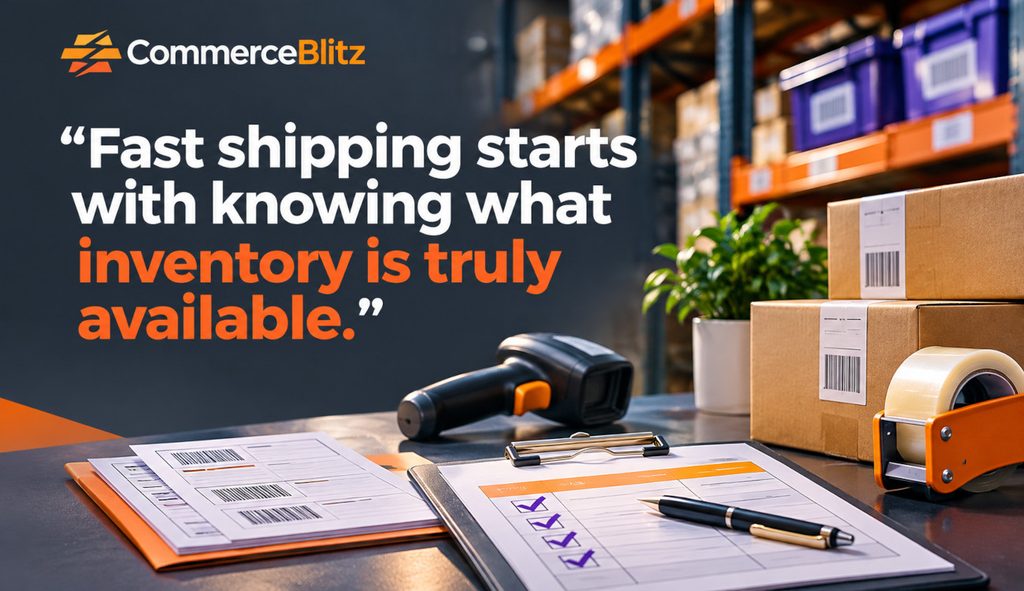
Fast shipping therefore starts with a reliable inventory picture.
A practical next step is to identify the orders that still require someone to verify quantity, location, ownership, status, or availability before fulfillment can continue. Those checks usually show where better inventory visibility can remove delay before the order reaches the warehouse floor.