
Why Inventory Accuracy Is the Foundation of Customer Trust
Customers rarely see the inventory process behind an order. They see whether a product appears available, whether the order ships as expected, whether the quantity is correct, and whether the business can explain what happened when something goes wrong.
Inventory accuracy sits underneath all of those moments. When the inventory record reflects what is physically available, the business can make promises with more confidence and fulfill those promises with less manual intervention.
When the record is wrong, the customer often feels the problem before anyone calls it an inventory issue. A delayed order, cancelled item, incorrect availability message, partial shipment, or unexpected replacement can all begin with a mismatch between the system and the physical stock.
That is why inventory accuracy is more than a warehouse metric. It becomes part of the customer experience.
Inventory Accuracy Shapes the Promise Before the Order Exists
The customer experience begins before an order reaches the warehouse.
A product page, marketplace listing, sales representative, or customer service team may rely on inventory information when telling a customer what is available. That information becomes part of the purchase decision.
If the system shows inventory that cannot actually be fulfilled, the customer receives a promise the operation may not be able to keep.
Inventory accuracy therefore affects trust before picking starts. The closer the system record is to the real inventory position, the more reliable the availability message becomes.
On-Hand Inventory Is Only Part of the Picture
Physical quantity alone does not always tell operations what can be promised.
Some stock may already be allocated to open orders. Other units may be on hold, waiting for inspection, assigned to another client, located in a different facility, or involved in a transfer.
A reliable inventory position needs to preserve that context. The operation needs to understand not only what exists, but what is actually available for the next order.
Without that distinction, a quantity can look correct while the fulfillment decision behind it is still wrong.
Small Inventory Errors Can Become Customer Problems
A discrepancy does not need to affect a large amount of stock to create a visible problem.
One missing unit can matter if it is the unit attached to an active order. One incorrect location can stop a picker even when the warehouse still has the product somewhere else.
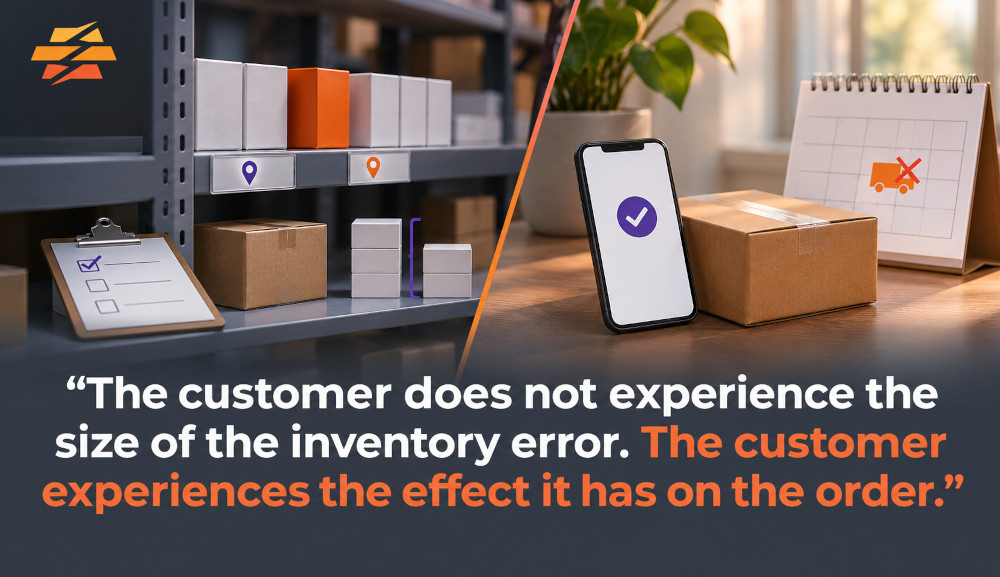
The customer does not experience the size of the inventory error. The customer experiences the effect it has on the order.
That makes inventory accuracy operationally important even when the overall quantity difference appears small.
Location Accuracy Matters as Much as Quantity
A system can show the correct total quantity while still sending the warehouse to the wrong place.
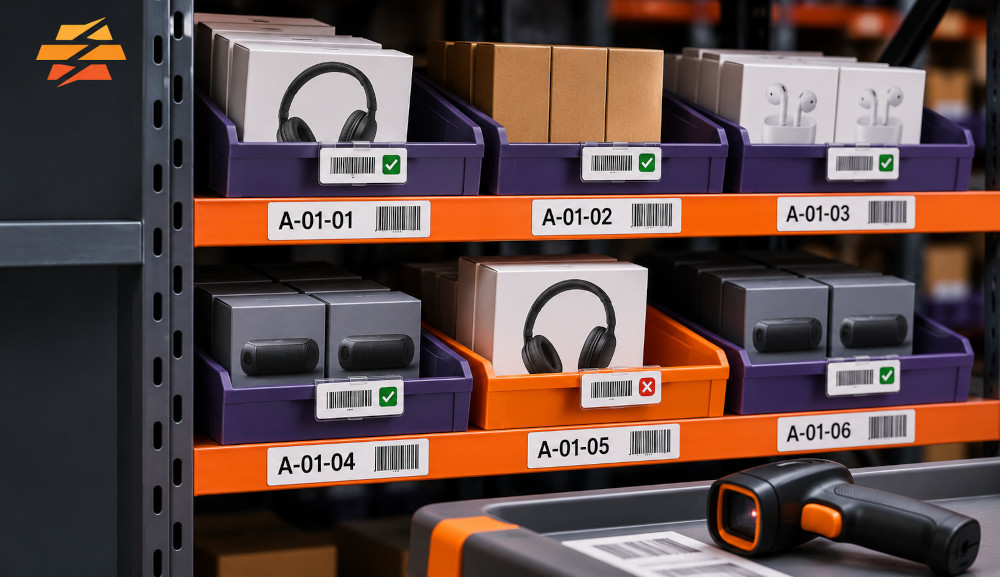
If stock is stored in a different location than the record indicates, the picker may reach an empty bin and need to begin searching. The order then becomes an investigation instead of a routine fulfillment task.
Location errors can also create false shortages. Inventory exists physically, but the operation cannot use it quickly because the record does not show where it is.
Accurate location data keeps the system view connected to the physical warehouse and helps orders move without unnecessary verification.
Receiving Is Where Inventory Trust Begins
Inventory accuracy does not start at picking. It starts when stock enters the operation.
Receiving needs to confirm what arrived, identify discrepancies, assign the correct ownership, record the right quantity, and place the inventory into a known location and status.
If an error enters the inventory record during receiving, every later process can inherit it. Allocation, replenishment, picking, reporting, and customer availability can all depend on that original record.
Good receiving discipline gives the rest of the operation a stronger foundation.
Adjustments Need Clear Operational Context
Inventory adjustments are sometimes necessary. Damage, counting differences, misplaced stock, receiving errors, and process corrections can all require the system quantity to change.
The important part is understanding why the adjustment happened and whether the physical operation supports it.
An unexplained adjustment may correct the number without correcting the process that created the discrepancy. If the underlying issue remains, the same type of error can return later.
Clear adjustment records make inventory accuracy easier to maintain because the business can distinguish a one-time correction from a recurring operational problem.
Cycle Counts Protect the Inventory Record
Physical inventory changes constantly as receiving, picking, transfers, returns, and adjustments move stock through the warehouse.
Cycle counting gives the operation a regular way to compare the system record with the physical reality.
The value is not simply finding differences. A useful count process also helps identify where those differences are coming from.
Repeated discrepancies in the same product, location, or workflow can point to a process that deserves attention before it creates more fulfillment problems.
Returns Can Distort Availability
Returned inventory often exists in the building before it is ready to become available again.
A returned item may need inspection, repackaging, testing, or another disposition decision. Until that process is complete, the operation needs a status that reflects the real condition of the stock.
Problems appear when the system makes the unit available too early or leaves it unavailable after the item has already returned to usable inventory.
Both situations affect customers. One creates a promise the warehouse may not be able to fulfill, while the other hides stock that could have supported an order.
Inventory Ownership Matters in 3PL Operations
For a 3PL, inventory accuracy includes another important question: who owns the stock?
Several clients may store similar or identical products in the same facility. The warehouse can have the correct physical quantity while the system assigns part of that quantity to the wrong account.
That creates risk across allocation, picking, reporting, and billing.
Client ownership needs to remain clear through receiving, storage, transfers, adjustments, returns, and fulfillment. Accurate quantity without accurate ownership is not enough.
Multiple Facilities Create a Broader Accuracy Problem
Inventory becomes harder to interpret when it is distributed across several warehouses.
The business may know the total quantity across the network while still lacking confidence in what is actually available at each location.
That matters because fulfillment decisions happen at the facility level. An order needs inventory that is available in the right place under the right status.
A connected inventory view should preserve both perspectives. Operations need the broader network position without losing the detail behind each warehouse.
Transfers Need to Preserve Inventory State
Transfers can create temporary uncertainty if the inventory record does not reflect where the stock actually is.
A unit can leave one facility before it becomes available at another. During that movement, the system needs to distinguish stock in transit from stock that can support an order immediately.
If both locations treat the same inventory as available, the business can promise stock twice.
If neither location reflects the transfer correctly after arrival, usable inventory can remain hidden.
Accurate transfer status protects the inventory picture while stock moves between facilities.
Allocation Depends on Inventory Accuracy
Allocation turns inventory information into an operational commitment.
Once stock is assigned to an order, the business is effectively saying that those units can support that demand.
That decision is only as reliable as the inventory data behind it.
If the quantity, ownership, location, or status is wrong, allocation can create a problem that does not become visible until picking begins. Better inventory accuracy allows normal orders to move forward with less hesitation.
Picking Is Where Earlier Errors Become Visible
The warehouse floor often discovers inventory problems that started somewhere else.
A picker reaches an empty location. The product is present but stored in another bin. The system quantity includes stock that is damaged or unavailable.
At that moment, fulfillment slows down because someone needs to determine what happened.
The picking process did not necessarily create the inventory error. It simply became the point where the system record and physical reality could no longer disagree quietly.
Customer Service Depends on the Same Inventory Record
Customer service often becomes involved when inventory accuracy fails.
A customer wants to know why an item has not shipped, whether another unit is available, or when the order can continue.
The quality of that answer depends on the information available internally.
If customer service needs to contact the warehouse every time the inventory position is unclear, routine communication becomes slower and less consistent.
Accurate inventory gives customer-facing teams a stronger basis for answering questions without creating another investigation.
Order Cancellations Can Damage Trust Quickly
A customer may accept that a product is sold out before ordering.
The experience is different when the product appears available, the order is accepted, and the business later cancels it because the inventory cannot be found or fulfilled.
At that point, the inventory discrepancy becomes a broken expectation.
This is one reason inventory accuracy matters beyond internal efficiency. The system record influences what the business tells the customer before the warehouse has touched the order.
Partial Shipments Can Begin With an Inventory Mismatch
An order may contain several products that appear available when the customer checks out.
If one of those items cannot be found later, the operation may need to hold the entire order, ship the available items separately, replace the missing product, or cancel part of the transaction.
Each response changes the original fulfillment plan.
The customer sees the result as a shipping or order problem. Internally, the root cause may still be inaccurate inventory.
Better Accuracy Reduces Manual Verification
Operations often compensate for weak inventory confidence by adding checks.
Someone confirms the quantity before releasing an order. A picker asks another employee to verify an empty location. Customer service contacts the warehouse before giving an availability answer.
Those checks can keep orders moving, but they also show where the operation does not fully trust its own inventory record.
As order volume grows, repeated verification creates more work around routine decisions.
Better inventory accuracy reduces the need to confirm information that should already be dependable.
Reporting Is Only Useful When the Inventory Behind It Is Reliable
Clients, managers, and operational teams may all use inventory reports for different decisions.
A report can be formatted correctly and delivered on time while still being misleading if the underlying inventory data is inaccurate.
That is especially important for 3PL clients that may not see the physical warehouse directly.
Their inventory report becomes part of how they understand what the operation is holding on their behalf.
Consistent inventory accuracy makes that reporting more useful because the client can rely on the data without repeatedly asking the warehouse to verify it.
Accurate Inventory Supports Better Planning
Inventory data influences decisions beyond individual orders.
Teams may use it when planning replenishment, purchasing, transfers, promotions, labor, or allocation across channels.
A distorted inventory position can therefore create more than one incorrect decision.
The customer impact may appear later, when stock is unavailable where demand actually occurs.
Better inventory accuracy gives planning teams a stronger picture of what the operation can really support.
Connected Systems Need Shared Inventory Meaning
Inventory information often moves through several systems.
A WMS may manage warehouse activity while ERP, EDI, ecommerce, client, and financial systems use inventory data for other purposes.
The issue is not simply whether every system contains a number. The operation needs those systems to preserve a consistent understanding of availability, ownership, location, and status.
If one system treats stock as available while another still considers it allocated or on hold, different teams can make different decisions from the same physical inventory.
Connected information becomes useful when the meaning stays consistent across the operation.
CommerceBlitz OMNI Can Add Operational Context
Improving inventory visibility does not necessarily require replacing the systems already running warehouse execution.
CommerceBlitz OMNI is designed as an additive bolt-on data layer that can connect operational information while existing WMS, ERP, EDI, and other systems continue performing their established roles.
For inventory, the value is the ability to understand quantity together with order, client, location, fulfillment, and exception context.
That broader view can help teams identify where the inventory record and the operational reality begin to separate.
Inventory Accuracy Is a Service Standard
Warehouse teams often think about inventory accuracy as an internal measure.
Customers experience it differently. They experience whether the product was really available, whether the order shipped as promised, whether the quantity was correct, and whether the business could explain an exception clearly.
Those experiences shape trust.
A reliable inventory record helps the business make fewer promises that the operation cannot support and gives teams better information when something does go wrong.
Customer Trust Begins With Operational Truth
Customer trust is built through repeated experiences that match expectations.
Inventory accuracy supports those experiences by keeping the system view close to what is physically happening inside the operation.
When quantity, location, ownership, status, and availability remain dependable, orders can move with fewer surprises and customer communication becomes easier to support.
A practical next step is to identify the inventory decisions that still require someone to verify the warehouse physically before trusting the system. Those checks usually show where inventory accuracy is already affecting the customer experience.